
Short answer
Ungasan is the value play on the Bukit — larger plots and lower prices than the cliff villages, at the cost of walkability, shade and immediate access to the coast.
Suits
- Families wanting land and space to build a longer-term base
- Value seekers who don't need to be on the cliff edge
- Long-term residents prioritising square metres over sea views
- People wanting central Bukit access to both the coast and the airport
Doesn't suit
- People who want to walk to cafes, shops or the beach
- Anyone wanting shaded, lush greenery — the plateau is dry and exposed
- Renters wanting established, finished villa stock rather than newer builds
- Households wanting a lively street scene
The area
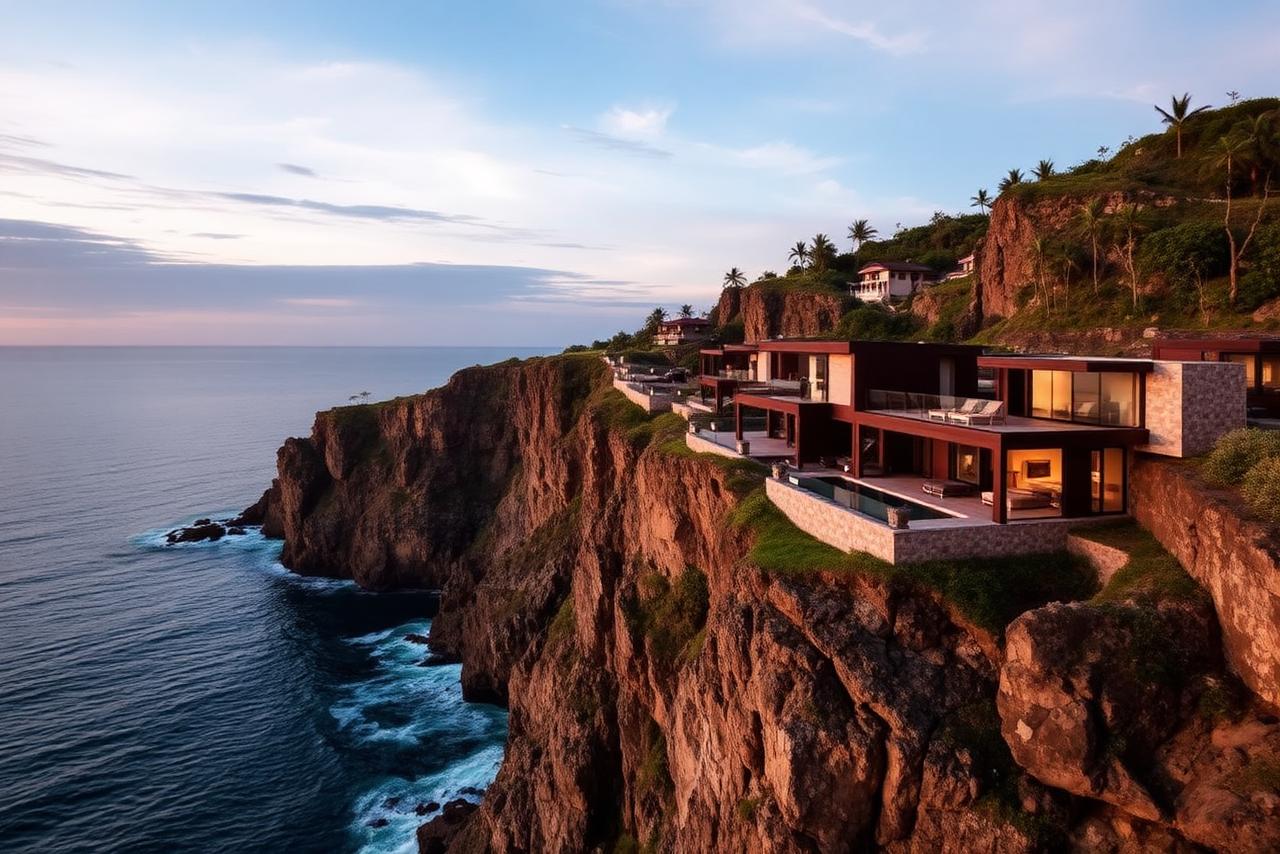
Ungasan sits inland on the Bukit — larger plots, lower prices and a short drive to both the cliffs and the airport. Popular with families building a longer-term base.
Life is quieter and more residential than the cliff villages — most days involve a drive for groceries, the school run or the beach, with socialising centred on home and a handful of local warungs. It suits people who want space and privacy over a bustling social scene.
Cost of living in Ungasan
| Rent, long-term lease | |
|---|---|
| One-bedroom villa | $673 – $1,250 |
| Two-bedroom villa | $1,250 – $2,115 |
| Three-bedroom family villalarger plots than equivalent cliff-village properties | $1,923 – $3,365 |
| Day to day | |
| Coworking (monthly) | $10 – $19 |
| Eating out (monthly) | $5 – $15 |
| Scooter hire | $63 – $91 |
| Total monthly budget | |
| Single person, all in | $1,058 – $1,731 |
| Couple, all in | $1,731 – $2,692 |
| Family of four, all in | $2,885 – $4,615 |
Indicative, mid-2026 — verify before relying on it. AUD converted at Rp 10,400 to the dollar.
Housing
The best land-per-dollar in South Bali.
This is where land-per-dollar goes furthest in South Bali — bigger blocks, bigger pools and more garden than equivalent budgets in Uluwatu or Bingin. Much of the stock is newer construction, since the area has developed rapidly over the past decade.
Twelve-month leases paid upfront remain the norm, though the availability of land here means longer leasehold and build-to-suit arrangements are more common than in the denser cliff villages. Verify land status (freehold versus leasehold, and any zoning restrictions) carefully before signing anything longer term.
Schools and families
A short drive to Jimbaran and Nusa Dua schools.
| School | Curriculum | Fees / year | Drive |
|---|---|---|---|
| Bali Island School (BIS) | IB | AUD 12k–24k | 20 min |
| Australian Independent School Bali | Australian/IB | AUD 10k–20k | 25 min |
Healthcare
Hospitals in Nusa Dua.
Day-to-day healthcare relies on small local clinics, with the nearest full-service hospital a 20–25 minute drive to Nusa Dua; response times matter for anyone with ongoing medical needs.
Nearest hospital: BIMC Nusa Dua (about 25 minutes). Clinics nearby: Ungasan village clinic, Pecatu medical post.
Traffic and getting around
Roads across the plateau are wide and light on traffic compared with the cliff villages, making the daily drive to schools or the airport relatively predictable. There are few footpaths, so walking along the main roads isn't comfortable or safe.
Car or scooter essential.
Beach and surf
There's no beach in Ungasan itself — Melasti and the southern beaches are a 10–20 minute drive, with good surf and dramatic limestone cliffs. It's a genuine drive rather than a stroll, unlike the cliff villages further west.
Internet and working
Fibre coverage has expanded significantly on the plateau but remains patchier than in Jimbaran or Nusa Dua, so it pays to test the actual connection at a specific property before signing. Mobile data coverage is generally reliable as a backup.
Community
Mixed local and expat, quieter and more residential.
25–40 minutes to the airport.
What to watch out for
- The plateau is dry, exposed and hot, with far less natural shade than Ubud or the rice-field areas
- Little in the way of walkable amenities — everything requires a scooter or car trip
- Land and lease paperwork needs careful legal checking given rapid recent development
- Fewer established cafes and services compared with Uluwatu or Jimbaran
Common local traps
- Land brokers offering 'guaranteed' leasehold extensions that have no legal basis
- Off-plan villa sales requiring large deposits before construction has meaningfully begun
- Underquoted land certificates that don't match the actual boundaries being sold or leased
Ideal for
- Families wanting land
- Long-term residents
- Value seekers
Less ideal for
- Walkers
- People who want a lively street life
Common questions
- Why choose Ungasan over Uluwatu?
- Mainly space and price — you trade the coastal setting for a considerably larger home for the same budget.
- Is Ungasan good for families?
- It works well for families wanting land and space, provided you accept a car-dependent daily routine.
- How far is Ungasan from the beach?
- Around 10–20 minutes by car to Melasti and the southern Bukit beaches.
- Is Ungasan walkable?
- No — there are few footpaths and distances between amenities are longer than in the cliff villages.
- What's the healthcare like in Ungasan?
- Local clinics handle everyday needs; the nearest hospital is about 25 minutes away in Nusa Dua.
- Is land cheaper in Ungasan?
- Yes, generally — it offers some of the best land value on the Bukit peninsula.
- Do I need a car in Ungasan?
- Effectively yes — the plateau's road network and lack of footpaths make a car or scooter essential.
Last reviewed . Figures are indicative — we check them periodically and correct them when readers tell us they have moved.