
Short answer
Sanur is the most liveable settled family base in South Bali — flat, walkable, close to hospitals and schools, with almost no surf and a quiet nightlife scene.
Suits
- Families with school-age children who want established schools nearby
- Households who want hospitals and clinics within a short drive
- People who want to walk or cycle for daily errands
- Retirees and long-term movers who value routine over a scene
Doesn't suit
- Surfers — the reef kills any real swell
- People chasing nightlife or a young social scene
- Anyone who wants to be near Canggu or the west coast day to day
- Renters who want the cheapest possible villa on the island
The area
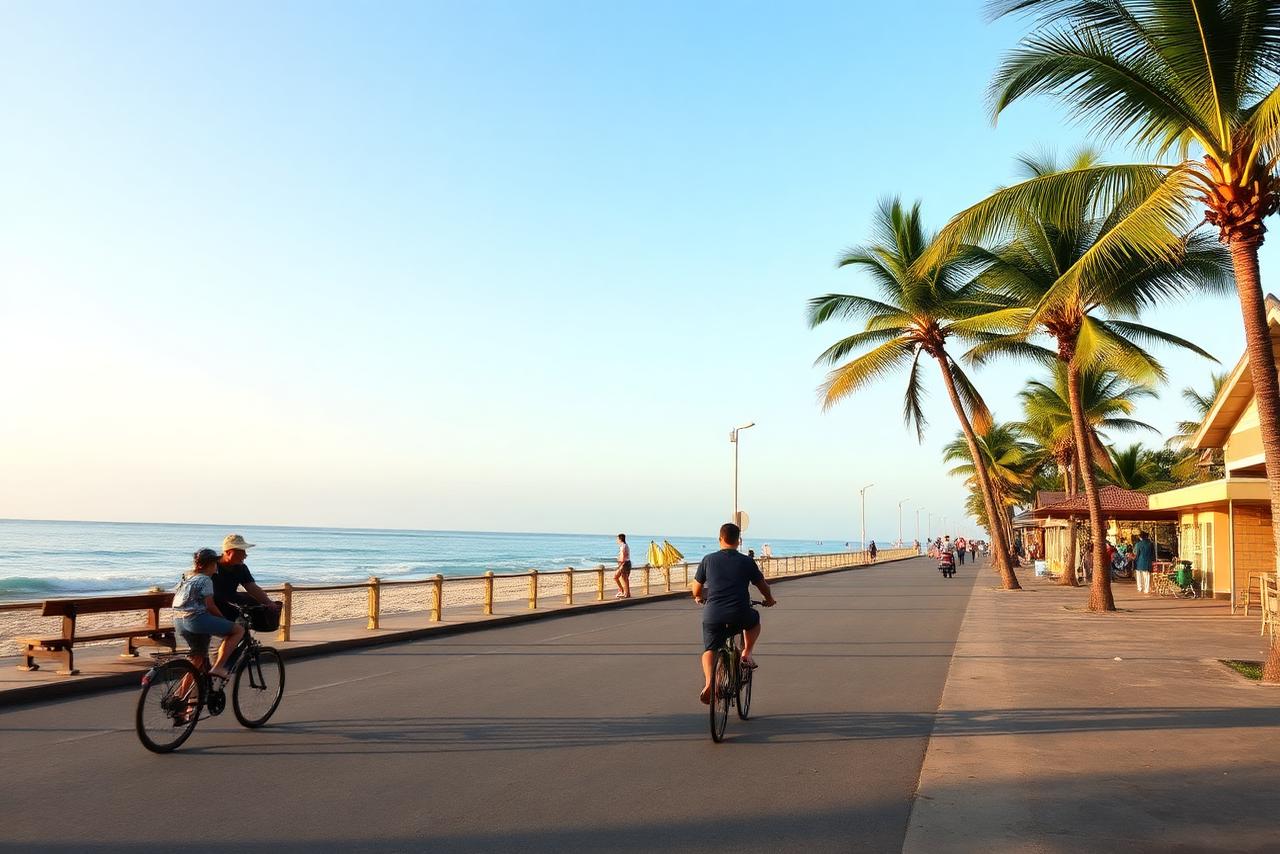
Sanur is Bali's most settled coastal neighbourhood — a long flat beachfront, a genuine cycle path, established schools, hospitals and a mix of long-term expat families and local Balinese life. It rarely tops holiday lists, which is exactly why it works so well as a place to live.
Mornings start with a walk or cycle along the beachfront path, followed by a slow café breakfast, school drop-off and an unhurried working day. Evenings are early and quiet compared with the west coast — most residents are in bed well before Canggu gets started.
Cost of living in Sanur
| Rent, long-term lease | |
|---|---|
| One-bedroom villa | $673 – $1,250 |
| Two-bedroom villa | $1,154 – $2,115 |
| Three-bedroom family villa | $1,923 – $3,654 |
| Day to day | |
| Coworking (monthly) | $12 – $27 |
| Eating out (monthly) | $4 – $19 |
| Scooter hire | $58 – $96 |
| Total monthly budget | |
| Single person, all in | $1,250 – $2,115 |
| Couple, all in | $1,923 – $3,269 |
| Family of four, all in | $3,077 – $5,288 |
Indicative, mid-2026 — verify before relying on it. AUD converted at Rp 10,400 to the dollar.
Housing
Long-term villas are reasonable value compared to the west coast, with plenty of three and four bedroom family homes on quiet gangs. Enclosed, air-conditioned living rooms are more common here than elsewhere.
Expect established, walled family villas on quiet gangs, often three or four bedrooms with enclosed air-conditioned living areas rather than fully open-plan tropical living. Housing stock is older on average than the west coast, but well-maintained options are common.
Annual leases paid upfront are standard, with two- and three-year terms available at a discount from long-term owners. Because Sanur has a stable expat population, negotiating a fair long-term lease is generally easier and less pressured than in fast-moving areas.
Schools and families
Sanur has some of the island's longest-established international schools, including IB and Australian-friendly options, with most families commuting under 15 minutes.
| School | Curriculum | Fees / year | Drive |
|---|---|---|---|
| Sanur Independent School | IB | AUD 9k–20k | 10 min |
| Bali Island School | IB | AUD 10k–22k | 20 min |
| Kupu Kupu School | Waldorf-influenced | AUD 6k–14k | 15 min |
Healthcare
Two of Bali's better-regarded hospitals and a dense cluster of clinics, dentists and specialists.
Sanur has the densest cluster of decent clinics and two hospital-grade facilities within easy reach, which is why so many long-term families and retirees choose it. It's still not equivalent to Australian emergency care, and serious cases are usually stabilised locally before evacuation.
Nearest hospital: BIMC Sanur (about 10 minutes). Clinics nearby: BIMC Sanur, Kasih Ibu Sanur, Sanur Clinic.
Traffic and getting around
Jalan Danau Tamblingan and the beachfront road get busy at school pick-up and early evening, but nothing like the west coast. Most trips within Sanur stay under fifteen minutes even at the worst times, which is the area's biggest practical advantage.
Flat, quiet roads make scooters and bicycles genuinely practical. Grab and Gojek are widely available.
Beach and surf
A protective reef keeps Sanur's water flat and safe for swimming and paddleboarding, which is exactly why families choose it, but there is essentially no surf. Anyone who wants to surf regularly will be driving to Canggu, Uluwatu or Kuta.
Internet and working
Fibre is common in villa compounds and reliable enough for daily video calls, though it isn't the fastest coworking scene on the island. Outages are occasional rather than frequent, and most households treat a backup mobile hotspot as cheap insurance rather than a necessity.
Community
A mix of long-term expat families, retirees and Balinese families — the community is stable rather than transient.
20–35 minutes to the airport, 45–70 minutes to Canggu depending on the hour.
What to watch out for
- Almost no surf, so anyone who came to Bali to surf will be disappointed
- Nightlife is thin, and younger renters sometimes find it too quiet after a few months
- Some beachfront restaurants charge tourist prices well above local equivalents
- Traffic to Canggu or the west coast can take over an hour, so treat it as a separate world
- Older housing stock means some villas need closer inspection for maintenance before signing
Common local traps
- Agents showing villas with vague or undocumented land certificates to rush a deposit
- Overpriced scooter rentals aimed at tourists near the beachfront strip
- Inflated 'foreigner pricing' at some beachfront restaurants compared with menus a street back
Ideal for
- Families with school-age children
- Anyone who wants to walk or cycle daily
- People who value calm over nightlife
- Households who want hospitals close by
Less ideal for
- Surfers
- Nightlife seekers
- People chasing a scene
Common questions
- How much does it cost to live in Sanur?
- A couple can live comfortably on roughly IDR 20–34 million a month all-in, including a two-bedroom villa, which is cheaper than most of the west coast for a comparable standard of living.
- Is Sanur good for families?
- Yes, it's widely regarded as the strongest family base in South Bali, with established schools, hospitals, a safe swimming beach and flat roads that make school runs straightforward.
- Can you live in Sanur without a scooter?
- More easily than almost anywhere else in Bali. The flat, quiet streets and cycle path make walking and cycling genuinely practical for daily errands, with Grab covering longer trips.
- Is Sanur boring compared to Canggu?
- It's quieter by design rather than lacking things to do. People who want beach clubs and nightlife find it dull; people who want routine and calm find it exactly right.
- What are the schools like in Sanur?
- Sanur has some of the island's longest-established international schools, including IB options, with most families commuting under fifteen minutes rather than the longer runs common further west.
- How long is a typical villa lease in Sanur?
- Twelve months paid upfront is standard, with two- to three-year leases common among long-term residents wanting a better rate.
- Is there any surf near Sanur?
- Not really — a reef keeps the water flat. Serious surfers usually keep a scooter or car for weekend trips to Canggu or Uluwatu instead.
Last reviewed . Figures are indicative — we check them periodically and correct them when readers tell us they have moved.